








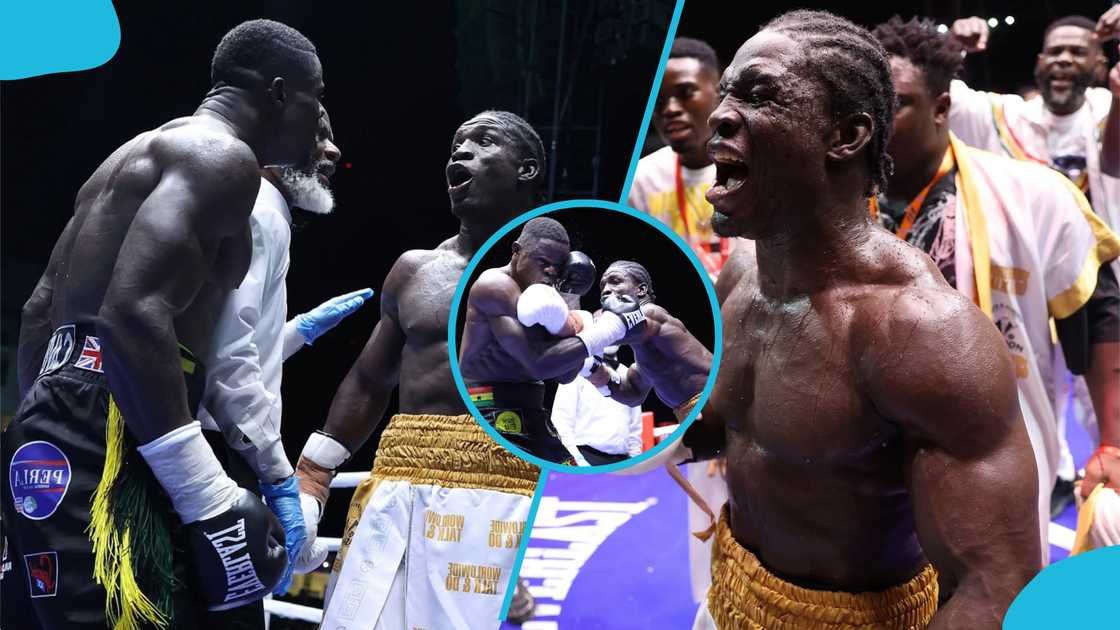

Yesterday’s boxing contest between Freezy Macbones and Jonathan Tetteh has generated significant controversy, with fans, analysts, and sections of the boxing community questioning the legitimacy of the unanimous decision awarded to Tetteh.
From a technical and tactical standpoint, many observers argue that the outcome does not align with the action witnessed in the ring. Macbones was widely viewed as the more composed and effective fighter across the majority of the bout. He demonstrated superior ring control, disciplined defense, and consistent shot selection, building rounds through clean combinations and measured aggression. Tetteh, by contrast, showed limited offensive output for long stretches of the fight, throwing few heavy punches and failing to sustain pressure beyond the early stages.
Independent assessments of the contest suggest that, at most, Tetteh could reasonably be credited with winning the opening one or two rounds, where his movement and early initiative were more evident. Beyond those rounds, however, Macbones appeared to dictate the pace and direction of the fight, steadily accumulating points through technical efficiency rather than spectacle.
The debate surrounding the verdict intensified following an incident in the eighth round, when an illegal action—biting to the shoulder—was penalized by the referee with a point deduction against Macbones. Even with this sanction, analysts note that Macbones clearly dominated that round in terms of activity, control, and effective punching. As such, many contend that the incident, already addressed by the referee, should not have outweighed his overall performance in either that round or the fight as a whole.
In light of these factors, a growing number of commentators have argued that the most defensible result would have been a draw. Such an outcome, they suggest, would have reflected the referee’s intervention while still acknowledging Macbones’ dominance over significant portions of the contest. A draw is widely seen as a result that would have attracted far less controversy and enjoyed broader acceptance among fans and professionals alike.
Instead, all three judges submitted scorecards in favor of Tetteh, a decision that has raised concerns about consistency and transparency in judging. Critics warn that verdicts perceived as unjust risk undermining confidence in the sport, discouraging fighters, and eroding fan interest at a time when boxing can ill afford further credibility challenges.
Calls have now emerged for the appropriate sanctioning and regulatory bodies to review the bout, clarify the scoring process, and explain how the judges arrived at their conclusions. While few are demanding an outright reversal, many insist that a formal review or rescoring explanation is necessary to preserve trust in the sport’s governance.
As debate continues, the Macbones–Tetteh fight stands as a reminder of the enduring tensions surrounding boxing adjudication—and of the importance of transparency and accountability in safeguarding the integrity of the sport.