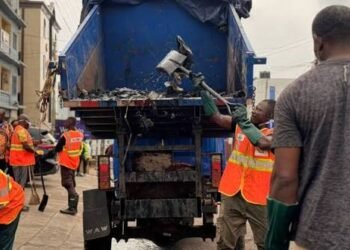








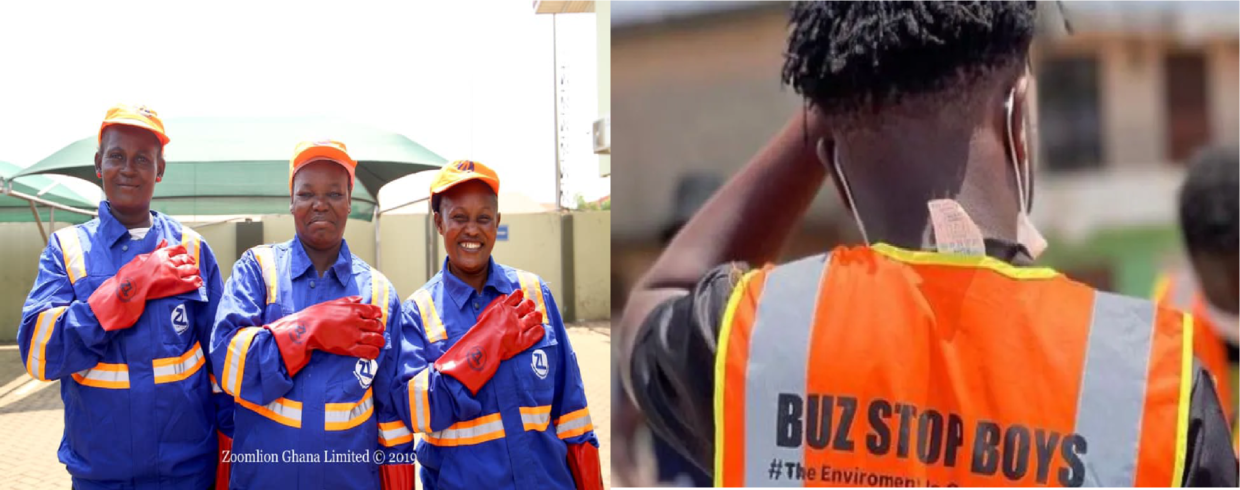
Public debate about sanitation in Ghana often turns into a contest of favourites. A video of Buzstop Boys clearing a clogged drain circulates on social media, and the applause quickly becomes a rebuke of Zoomlion. This dynamic intensified recently when the President publicly commended Buzstop Boys during the relaunch of the National Sanitation Day. While the recognition was deserved, it inadvertently fueled perceptions of rivalry between the two groups, with some even suggesting a hidden agenda to promote one over the other. Yet such suspicions risk missing the point: Buzstop Boys and Zoomlion are not competitors. They operate at fundamentally different levels of Ghana’s sanitation ecosystem, and the nation needs both.
Buzstop Boys embody the spirit of civic volunteerism. Their unpaid commitment, community mobilisation, and visible clean-ups reflect a culture of shared responsibility. Their work is a timely reminder that sanitation is not only the government’s duty but also a citizen’s calling.
Zoomlion, by contrast, functions on a different plane altogether. It is a large-scale operator with nationwide reach, advanced equipment, landfill management, recycling plants, and complex logistics. On the level of daily waste collection, disposal, and national systems management, there is simply no comparison. To pretend otherwise is to misunderstand the field.
Zoomlion is not without its challenges. Allegations and perceptions of corruption have hurt its credibility, particularly among younger Ghanaians on social media. Yet the company’s biggest strategic error has been its overreliance on traditional media while neglecting social media platforms. The reality is that the younger generation lives and debates online, and it is there that agenda-setting begins. By failing to engage consistently in that space, Zoomlion has allowed negative narratives to dominate unchallenged. If Zoomlion had consistently posted its operational activities, showcasing collections, recycling initiatives, new equipment, and landfill management, its videos and updates would have spoken for themselves and shaped a different public perception. This is precisely what Buzstop Boys do well: they document, share, and amplify their work in ways that resonate with online audiences. Their mastery of visibility has made them beloved, while Zoomlion’s silence has too often left a vacuum filled by criticism.

Even so, it would be unwise to allow disaffection to erase Zoomlion’s undeniable contributions. From recycling plants and landfill upgrades to heavy-duty equipment and nationwide logistics, Zoomlion has introduced systems and technologies Ghana had never seen before. These investments continue to shape the country’s waste management capabilities.
Praising Buzstop Boys should not come at the expense of disparaging Zoomlion. Every time the success of volunteers is framed as a failure of the company, we manufacture a rivalry that does not exist. Worse, it risks creating hostility among supporters of both entities. Ghana’s sanitation crisis is too pressing for us to indulge in a zero-sum game.
The more constructive approach is to recognise complementary contributions.
- Buzstop Boys deserve their flowers for igniting civic pride and demonstrating that communal labour is possible and impactful.
- Zoomlion deserves recognition for building and maintaining the large-scale infrastructure that keeps cities functioning on a daily basis.
The right path is not to destroy Zoomlion but to demand accountability and reform. The company must embrace transparency, adopt modern communication strategies, and showcase its impact more consistently. Equally, we should protect volunteer groups like Buzstop Boys from being crushed under the weight of premature hero-worship. Sudden fame can create internal pressures, financial disputes, and governance struggles. They need sustainable support structures, not unhealthy comparisons. The reality is simple: Ghana cannot afford to pit one against the other. Volunteerism and industrial capacity serve different purposes. Buzstop Boys inspire communal responsibility; Zoomlion delivers the infrastructure and logistics that keep the system moving. Both are indispensable in their own ways.
Buzstop Boys deserve all the recognition they are receiving, but we must be clear—they are not competitors to Zoomlion. Ghana’s sanitation challenge is too vast for rivalry. What we need is cooperation, accountability, and complementarity. Let us celebrate civic energy while also demanding excellence from our large-scale operators. In doing so, we will move closer to the real goal: a cleaner, healthier Ghana.