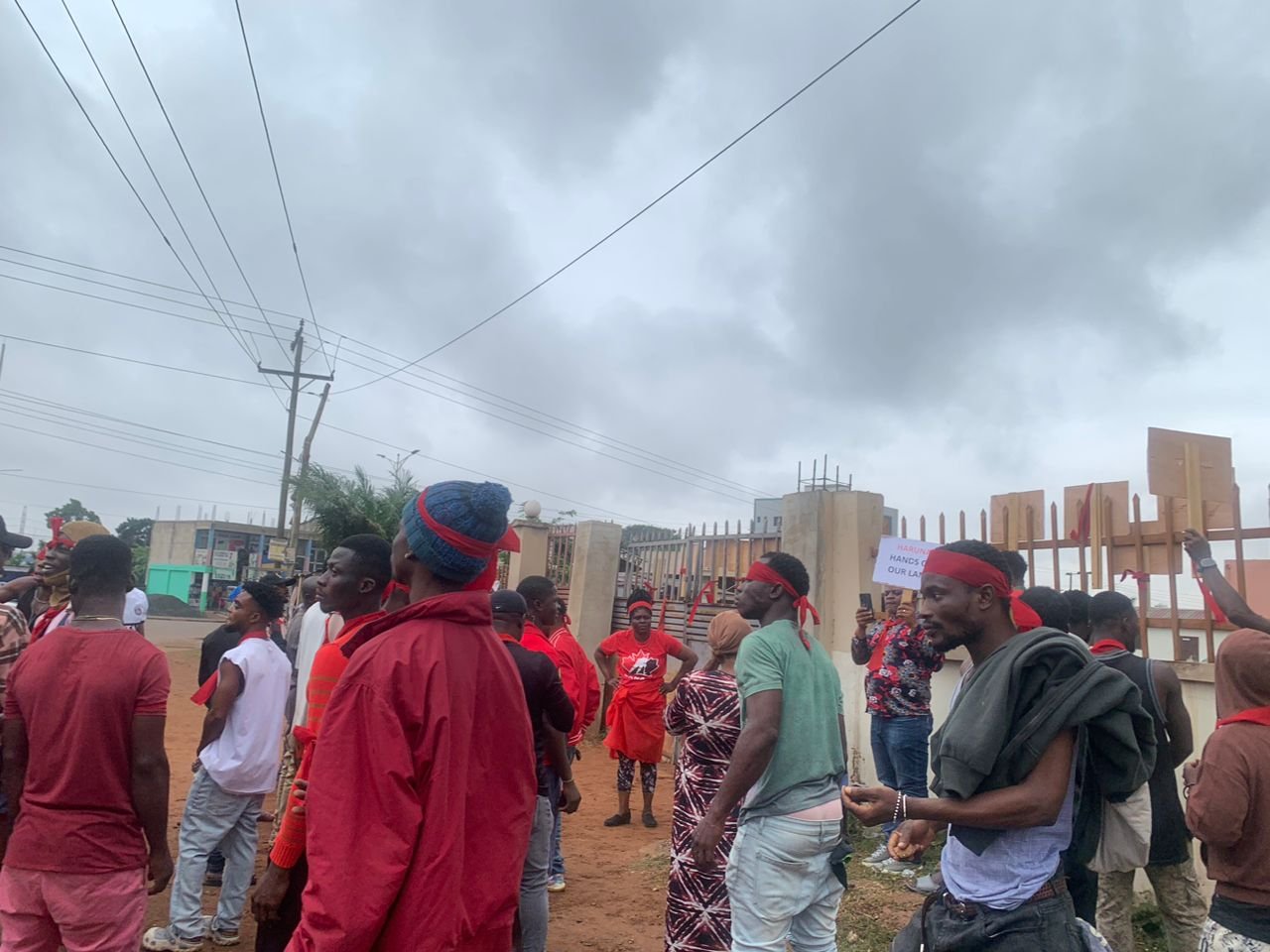








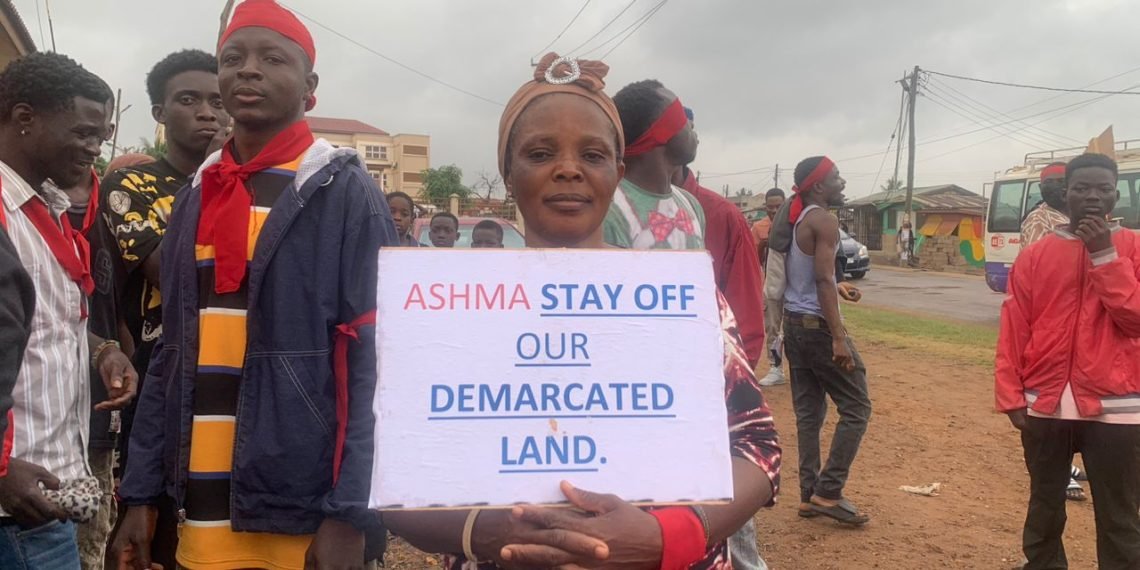

More than a hundred traders from the Peaceful Settlement Association in Ashaiman took to the streets today, August 18, 2025, protesting what they described as an unlawful eviction by the Ashaiman Municipal Assembly (ASHMA) despite a court injunction halting any such action.
The demonstrators, who claim legal title to the disputed land, accused municipal officials of coercing them into signing agreements favoring a private developer. The association’s spokesperson, Jeffery Eli, denounced this as intimidation, asserting: “We are here to protest against the municipal executives for intimidating us into signing an illegal agreement with a private developer. These developers called us into an office and demanded we sign an agreement with the encroacher so he could take over the land. The land belongs to the Peaceful Settlement Association, and we have documents to prove ownership.” He strongly emphasized: “We do not understand why the MCE is intimidating us under the guise of decongestion and attempting to settle the matter out of court. The case is in court, and it should be decided there.”
According to the traders, some have already lost their shops and livelihoods amid the dispute. They maintain that their ownership is anchored in official documentation. Despite a court injunction restraining eviction, the Municipal Assembly is alleged to be pressing ahead, this, they say, flouts the judicial process and undermines the rule of law.

The protest unfolded peacefully, with traders holding placards and making their grievances known to media representatives. Their message was unequivocal: until the courts render a decision, no enforcement or relocation should occur.
This episode gains particular weight considering Ghana’s constitutional emphasis on judicial authority. If substantiated, allegations of extrajudicial attempts to evict lawful occupants would challenge the fundamental premise of due process. Amid the often fraught interface between urban development and informal economies, the case underscores tensions between municipal planning efforts and residents’ rights.
Notably, the Peaceful Settlement Association’s readiness to defend its claims is underpinned by possession of land-title documentation. Yet, despite this, pressure from municipal executives and an intermediary private developer appears to be mounting. The association points to a troubling pattern: leveraging decongestion rhetoric to bypass formal court processes, potentially disenfranchising traders who depend on the site for their daily earnings.
Observers, including legal practitioners and civil rights advocates, may well monitor the unfolding events closely. Should the municipal assembly indeed be defying an active court injunction, the courts and possibly human rights bodies could be called upon to enforce the judicial order.
As of now, the court injunction remains in force, and the protest has drawn public attention to the precarious position of the traders. No further action by ASHMA has been reported today, though traders remain vigilant, asserting that any attempt at forced removal will be met with resistance.