


The Minority Caucus in Parliament has withdrawn from a scheduled briefing by the Governor of the Bank of Ghana after objecting to a decision to hold the engagement without media coverage.
The caucus said the closed session would prevent the public from following questions about the central bank’s foreign-exchange operations and the reported movement in Ghana’s gross international reserves during the second quarter of 2026.
Kojo Oppong Nkrumah, Ranking Member on Parliament’s Economy and Development Committee, said the Minority had submitted three questions on the source, framework and scale of foreign exchange supplied to the market. He said the caucus wanted the Governor to explain where the foreign exchange came from and how much had been used.
The Ofoase/Ayirebi MP cited a May 2026 report which, he said, placed gross international reserves at $14.2 billion at the end of the first quarter. The Minority’s checks placed the figure at about $12 billion by the end of June, producing a difference of approximately $2.2 billion.
Mr Oppong Nkrumah asked the central bank to confirm whether the change was connected to market interventions. The figure and the Minority’s interpretation were presented as questions to the Governor, not as a finding accepted by the Bank of Ghana.
The caucus also referred to a written response placed on Parliament’s Order Paper. According to Mr Oppong Nkrumah, the response stated that the Bank of Ghana had not undertaken direct market interventions drawing on its reserves since August 2024. It said most foreign-exchange intermediation had instead been executed through the Domestic Gold Purchase Programme.
The Minority argued that the Governor’s answers ought to be delivered in a forum accessible to journalists because similar appearances by public officials had previously received media coverage. Its members suspended participation and said parliamentary leaders would continue discussions on opening the engagement.
Majority Leader Mahama Ayariga rejected the suggestion that the arrangement was intended to conceal information. He said appearances by heads of state institutions before the Committee of the Whole were ordinarily conducted without media coverage.
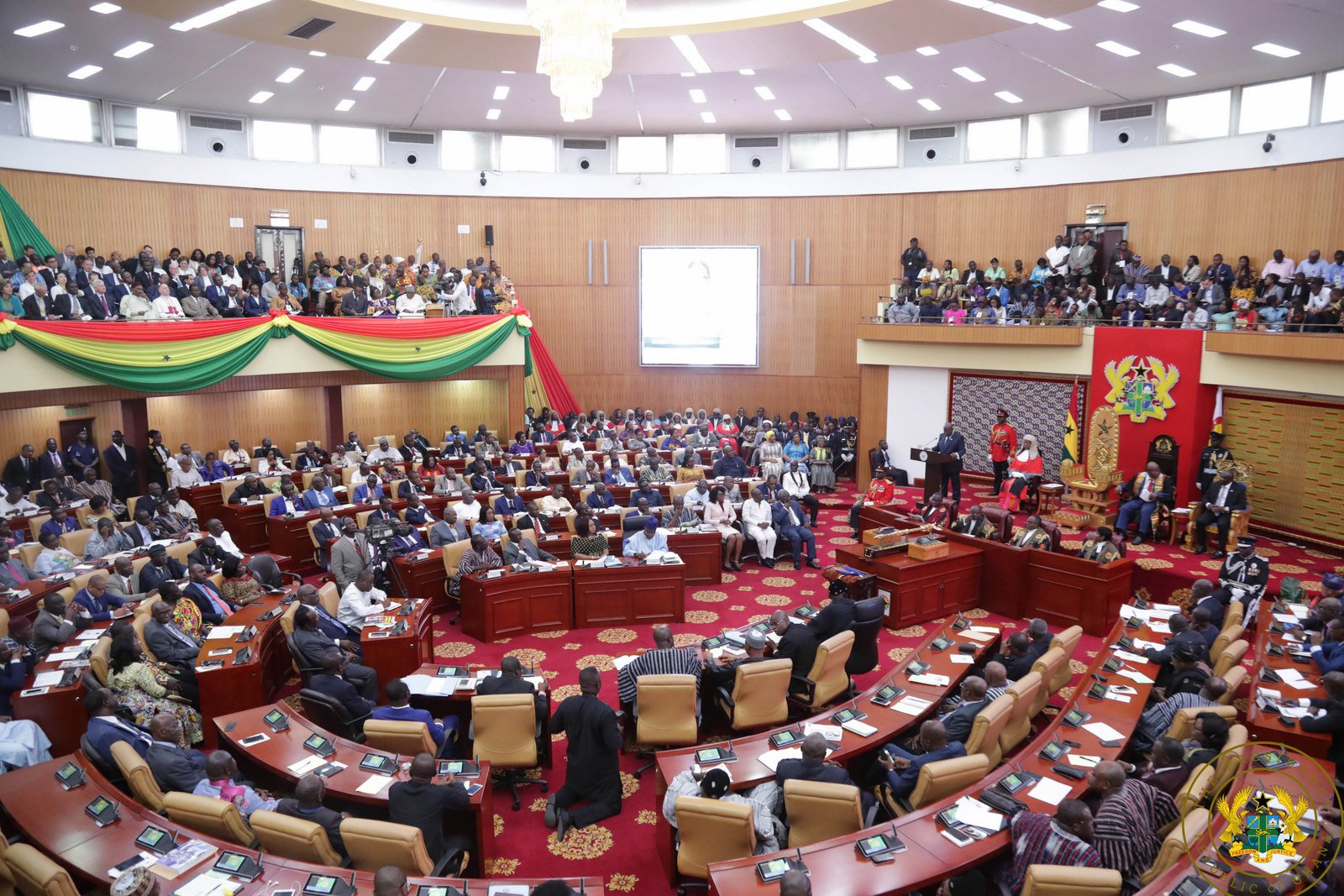
The Committee of the Whole allows all Members of Parliament to sit as one committee to receive briefings or consider matters of urgent national importance. Such meetings may be held in camera when the subject includes sensitive economic, security or confidential information, even though formal sittings of the House are generally open.
The dispute therefore involved both the substance of the Minority’s questions and the procedure selected for receiving the Governor. The caucus maintained that the public importance of the reserve and foreign-exchange issues justified media access, while the Majority defended the closed format as established parliamentary practice.

No final public response from the Governor to the three questions was delivered during the aborted participation. The Minority’s claim of a $2.2 billion decline also remained subject to confirmation from the central bank and the official reserve series.
The written answer cited by the caucus distinguished direct intervention using central-bank reserves from foreign-exchange activity linked to domestic gold purchases. That distinction is central to the questions the Minority wants clarified, including the amount of foreign exchange channelled through the market and the accounting treatment applied to it.
Parliamentary leaders were expected to determine whether the briefing would proceed under the existing closed-door arrangement or be reconvened with media access. The latest verified position was that the Minority had suspended its involvement pending further engagement on the format.