







The Ghana 24-Hour Economy Authority says it has signed bankable agreements worth more than $8 billion within the past 90 days, in what officials describe as growing investor interest in the government’s flagship economic transformation programme.

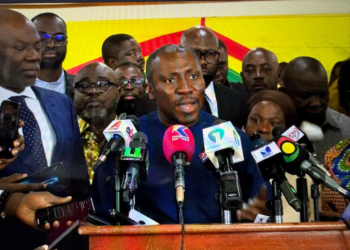
Gabriel Opoku-Asare, Chief Export Development Officer at the Authority, disclosed this during a roundtable discussion on Channel One TV as part of the Citi Business Festival on Thursday, June 11, 2026.
The discussion was held under the theme, “Unlocking Africa’s Single Market: How Can Ghanaian Businesses Win Under AfCFTA?”
According to Mr Opoku-Asare, the agreements form part of the Authority’s strategy to place private capital at the centre of Ghana’s 24-Hour Economy agenda. He said the government’s role is to coordinate investment, support enabling conditions and reduce pressure on public finances.
He explained that the programme is not designed to rely mainly on sovereign debt. Rather, it seeks to attract private-sector financing into industrial corridors, export-oriented production, logistics, energy and agro-processing projects.
The $8 billion figure, he said, reflects bankable agreements signed over a three-month period. Such agreements are usually understood as commercially structured projects that may attract financing, although they do not necessarily mean all funds have already been disbursed.
Mr Opoku-Asare said the Authority’s work is focused on coordinating investment and creating the right environment for private capital to move into productive sectors of the economy.
The disclosure comes as government continues to promote the 24-Hour Economy and Accelerated Export Development Programme as a major vehicle for industrial expansion, job creation and increased participation in the African Continental Free Trade Area.
A related Citi Business Festival report said the Authority had signed four major bankable projects under the programme. These include a $1.4 billion Buipe Solar Power project, a $6.4 billion cassava bioenergy project at Buipe and Damango, and an oil palm plantation project around Kabonwule valued at about $300 million. The report also mentioned plans connected to the Tamale Cargo Port.
The 24-Hour Economy Authority was established to coordinate the implementation of Ghana’s 24-Hour Economy and Accelerated Export Development Programme. The programme seeks to expand productivity, strengthen local production systems, support export development and create jobs through a more integrated national economic model.

President John Dramani Mahama assented to the 24-Hour Economy Authority Bill in February 2026, giving legal effect to the Authority as a central coordinating body for the policy.
Supporters of the programme argue that it could help Ghana move away from dependence on raw material exports by strengthening value addition, manufacturing and logistics. Critics, however, have raised concerns about possible duplication of existing state institutions and the need for clearer evidence of implementation outcomes.
For Ghanaian businesses, especially exporters, manufacturers, agribusinesses and logistics firms, the Authority says the programme is intended to open opportunities under AfCFTA by linking local production to wider African markets.
The Authority has not yet publicly released a full breakdown of all the agreements, their financing timelines or the specific private investors involved. Until those details are published, the $8 billion figure remains an official claim that will require further disclosure for independent verification.