







Ghana’s informal cross-border trade reached GH¢31 billion between January and September 2025, exceeding the value of formal trade with the country’s three land neighbours during the same period.
The Ghana Statistical Service disclosed the figure in its Informal Cross-Border Trade Survey, the first extended national assessment of goods moving outside formal customs records through Ghana’s borders with Togo, Burkina Faso and Côte d’Ivoire.
Informal transactions accounted for about six per cent of Ghana’s total trade in each of the three quarters studied. Formal trade with the three neighbouring countries was valued at GH¢20.1 billion, nearly GH¢11 billion below the informal total.
Government Statistician Dr Alhassan Iddrisu said the survey brought a large segment of economic activity into the country’s statistical picture. Small-scale exchanges across land borders support households, employment and the supply of goods to markets but had largely remained uncounted in official trade data.
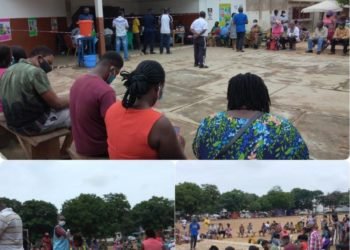
The study covered 206 active border points across 10 regions. Data were collected through direct observation and interviews, with 676 officers deployed for the exercise. The Ghana Revenue Authority, Ghana Immigration Service and other institutions collaborated on the survey, which received support through the World Bank-backed Harmonising and Improving Statistics in West Africa Project.
Trade with Togo recorded the highest level of informality. The share rose from 70.5 per cent in the first quarter to 77.8 per cent in the third. More than three-fifths of Ghana’s total trade with Côte d’Ivoire also moved through informal channels.
The pattern with Burkina Faso changed during the period. Trade was predominantly formal in the first quarter but became mostly informal in the next two quarters. Burkina Faso remained the leading destination for Ghana’s agricultural exports, receiving nearly 63 per cent.

Togo was the main destination for informal exports of fuel, food and beverages and the primary source of most informal imports. Alcoholic drinks, soft drinks and energy drinks formed about 30 per cent of informal food exports, while cooking oil was the single largest informal food import.
Tricycles were the most common means of transport recorded at the borders. Goods carried by tricycle averaged GH¢2 billion in exports and GH¢1.7 billion in imports per quarter.
Ghana maintained an overall informal trade surplus, but it narrowed sharply from GH¢665.3 million in the second quarter to GH¢49.3 million in the third. The bilateral deficit with Togo widened from GH¢725.5 million in the first quarter to GH¢994.1 million in the third.
The food component showed an additional change. Ghana’s informal food-trade deficit doubled from about GH¢400 million in the first quarter to approximately GH¢800 million in the third quarter. Volta, North East, Northern and Oti regions consistently imported more than they exported through informal routes.
The Statistical Service’s recommendations include simpler registration and licensing for small traders, improved roads and facilities at major crossings and stronger data-sharing among public institutions. It also identified rice, cooking oil and livestock as commodities for targeted domestic production and border-region value chains.
The service plans to institutionalise the measurement of informal trade so that future economic and regional-integration decisions include activity currently omitted from customs statistics. The findings will also inform Ghana’s participation in the African Continental Free Trade Area.
The quarterly results also show why the aggregate GH¢31 billion figure cannot be treated as a single commodity flow. It combines exports and imports moving through numerous crossings, regions, transport methods and product groups.