








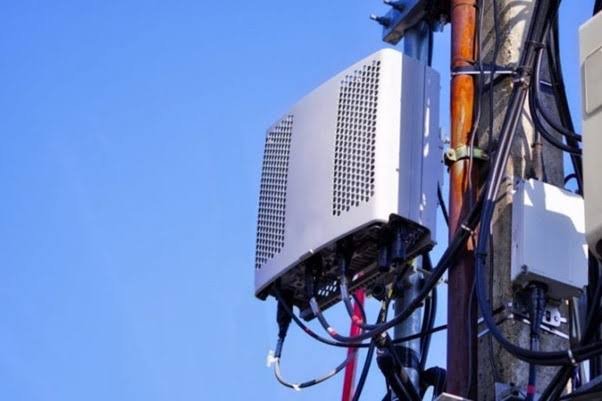
Ghana’s shared 4G and 5G telecommunications platform has entered commercial operation after the National Communications Authority completed inspections and technical validation of the wholesale network.
Next Gen Infraco, the licensed Wholesale Electronic Communications Infrastructure provider, said the authority had confirmed that it met the conditions required to begin service under its licence.
The platform is active in selected parts of Accra, Kumasi and Tamale, as well as other identified locations. Nationwide expansion will proceed in phases in line with the company’s licence obligations and the government’s digital-coverage programme.
Ghana’s model separates wholesale infrastructure from retail mobile service. NGIC builds and operates the shared radio and core network, while licensed mobile-network operators connect to it and sell services directly to consumers and businesses.
The structure is intended to avoid separate operators duplicating expensive network infrastructure while preserving competition at the retail level. The common backbone is designed to support several licensed providers rather than operate as a consumer-facing mobile network.
NGIC Chief Executive Officer Tenu Awoonor said commercial activation moved the programme from planning into execution. He said coordinated infrastructure investment would allow capital to be directed towards wider coverage while operators continued to compete through products and services.
Chief Operating Officer Nenyi George Andah said the next stage would focus on expanding the active backbone. The company’s operational task now covers additional radio sites, transmission links, core capacity and connections with mobile operators and infrastructure partners.
The activation follows confirmation from the regulator that the network complied with the relevant technical and licensing requirements. The NCA’s role included inspections and validation before authorising commercial wholesale operations.
The government has set a target of reaching 70 per cent 5G population-density coverage by Ghana’s 70th Independence anniversary. NGIC said the shared design would support that target by coordinating investment nationally instead of requiring each retail operator to construct a parallel network.
Nokia is providing core network technology for the platform. Mustapha Salah, the company’s Head of Mobile Networks for Central West and East Africa, described it as Ghana’s first neutral-host shared 4G and 5G network.
The arrangement also involves connecting mobile operators, tower companies, fibre providers and financing institutions. NGIC said commercial service depends on those parts of the telecommunications chain working together as the network moves beyond its initial locations.
For customers, the activation does not mean every handset or community immediately has 5G coverage. Access will depend on the retail operator serving the customer, that operator’s connection to the wholesale platform, coverage in the customer’s location and the compatibility of the device and service plan.

The company did not publish a complete location-by-location coverage map or a final nationwide completion date in the announcement. It said expansion would follow the conditions of its licence and national policy targets.
In a separate regulatory decision effective July 15, the NCA removed the condition that made NGIC Ghana’s exclusive wholesale 5G infrastructure provider. The authority said the rest of NGIC’s licence, including its spectrum assignment and other rights and obligations, remained valid. It said ending exclusivity would permit competition in the wholesale market.
NGIC will operate the underlying infrastructure and will not replace the licensed companies that manage customer accounts, pricing and retail support. The shared backbone is therefore an infrastructure layer through which operators can deliver higher-speed mobile broadband and enterprise services.
The company’s licence identifies it as an infrastructure provider, making the connection between NGIC and licensed retail networks a necessary part of service delivery in each new coverage area.
The latest verified position is that the wholesale platform has regulatory clearance, is commercially active in selected urban locations and has entered its phased national expansion stage.