






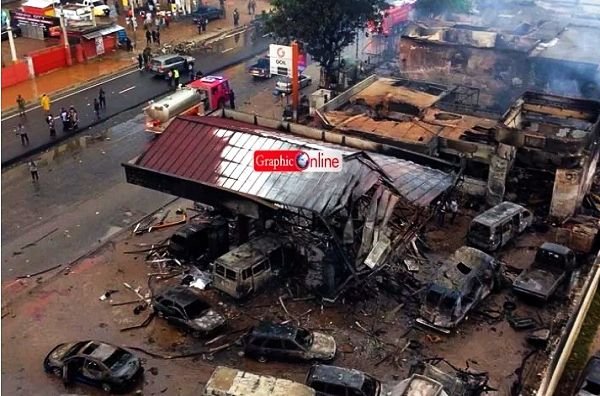
Eleven years after the June 3, 2015 flood and fire disaster that killed more than 150 people at the Goil Filling Station on the Kwame Nkrumah Circle and burned its way into Ghana’s national memory, the rains returned to Accra on the same date in 2026. They found a city that had been warned repeatedly, promised infrastructure repeatedly, and had yet to fully resolve the conditions that make each rainy season a fresh emergency.
The flooding that swept through Accra on June 3, 2026 was not a freak event. It was the continuation of a pattern that has repeated itself without exception every year since 2015. The names of the affected communities barely change. The images look identical. The calls for action echo the ones issued twelve months before.
What Happened on June 3
Heavy rainfall on June 3, 2026, triggered widespread flooding in Accra and parts of the Greater Accra Region, submerging homes, cutting off major roads and bridges, and displacing families. The rains began in the late afternoon and intensified through the evening. Within an hour, low-lying areas turned into rivers as choked drains and poor drainage systems failed to contain the runoff. centroserve
The Odaw River overflowed, flooding shops and trapping commuters. The Kaneshie-Circle stretch was impassable for hours, leaving vehicles stranded. Residents waded through waist-high water. Several homes lost furniture and appliances to the flood. Floodwaters entered bedrooms and kitchens, forcing families to seek higher ground late into the night. Major roads including the Kwame Nkrumah Circle interchange, Graphic Road, and parts of the Accra-Tema Motorway experienced severe congestion. Bible Quiz
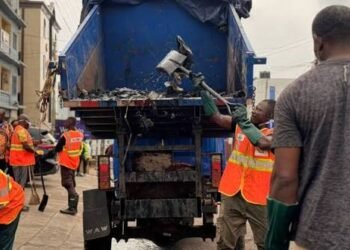
From Kaneshie and Odawna to Adabraka and the Kwame Nkrumah Circle enclave, roads turned into rivers within hours, trapping commuters and forcing families to flee their homes. Emergency responders worked through the night, rescuing residents trapped by rising water, including dozens evacuated from flood-prone communities.
The flooding did not arrive alone. On the same evening, a fire broke out at Tudu, just metres from the Accra Regional Police Headquarters. Traders at Tudu, known for its dense cluster of wholesale and retail shops, watched in panic as the fire spread quickly through congested wooden structures and flammable goods stored close together. “We lost everything — fabrics, electronics, everything I used to feed my family,” one affected trader told reporters while sifting through charred remains.
It was, in the words of one commentator, an eerie and painful echo of June 3, 2015 — the day flood and fire converged on the same part of the city and took 150 lives.
The Communities That Bear the Worst of It
Accra’s flood map is no longer confined to known low-lying areas. The waters have pushed outward over successive rainy seasons, claiming established residential and commercial zones including Gbawe, Dansoman, Kaneshie, and Christian Village. Central commuter routes and premium real estate zones once considered immune — including Madina, Legon, Lashibi-Klagon, the Airport to Tetteh Quarshie corridor, Ofankor, Dzorwulu, and Weija — now routinely submerge, trapping thousands of commuters and cutting off economic activity.
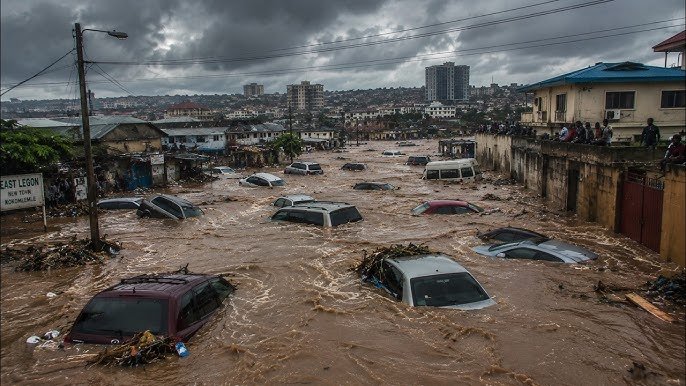
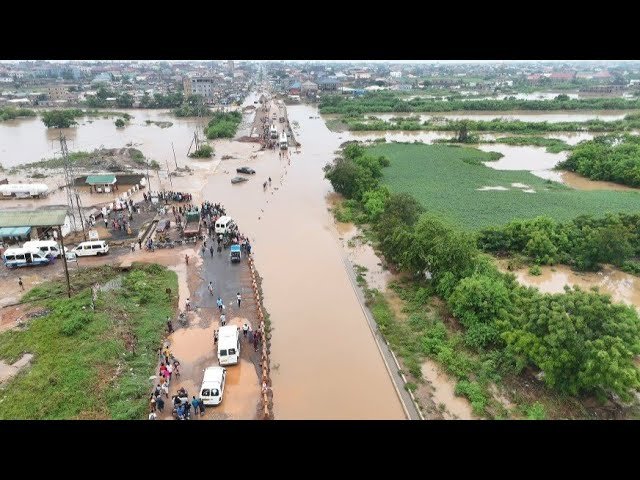
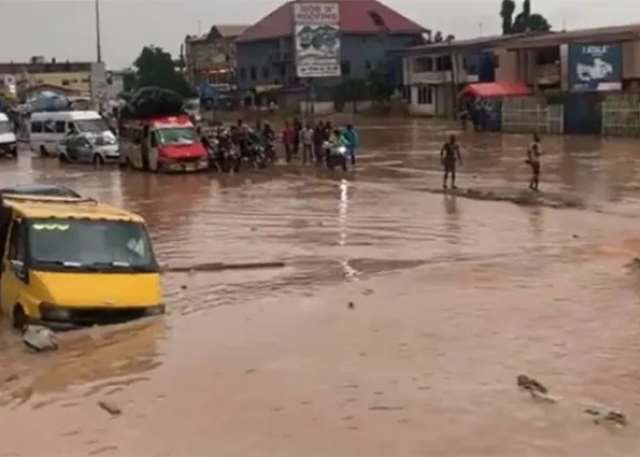
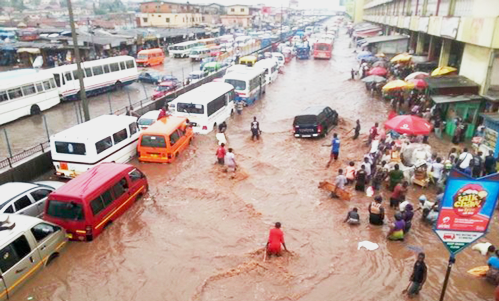
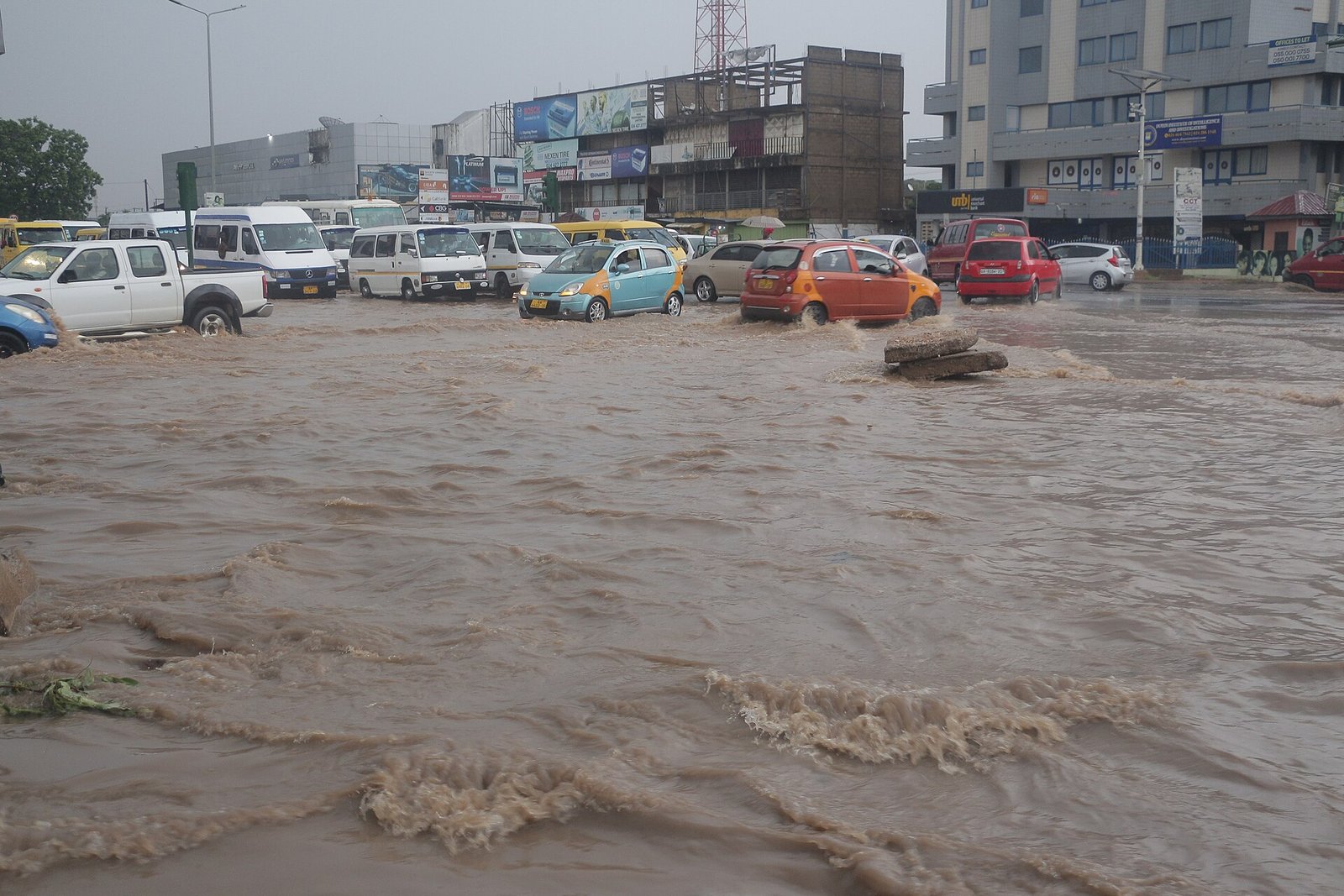
The June 3 flooding confirmed that pattern. Communities affected in previous years were affected again. Among the worst hit were Kaneshie, Odawna, Adabraka, parts of Tema, and communities along the Odaw corridor. These are not remote settlements on the city’s fringe. They are commercial and residential areas at Accra’s heart, where markets, schools, churches, offices, and homes sit side by side on land that turns to water every time the sky opens.
Markets including Makola and Kaneshie suffered immediate losses, with traders watching stock accumulated over months destroyed within hours. For many low-income households, a single flood is not a temporary setback. It is a financial shock that can erase years of progress.
A resident captured what many felt in a single sentence: “We are reliving the same story every rainy season. When it rains like this, we know trouble is coming.”
NADMO’s Response
The National Disaster Management Organisation activated emergency operation centres nationwide as heavy rains triggered flooding across Accra, submerging homes and destroying property. The move was aimed at strengthening coordination of rescue and relief efforts, with response teams placed on standby in flood-prone communities across the country. Oakadept Printing
Senior Officer at NADMO’s Inspectorate Department, Alhaji Mohammed Abubakar, told Citi News that the organisation’s decentralised system enables quick deployment of emergency teams once reports are received. “The emergency response team is always on standby and they are always prepared. Once we receive a report, they move to the area to assist,” he said. He added that teams are equipped to support evacuations and pump water out of affected homes.
NADMO’s operational response in 2026 is more functional than it was a decade ago. Early warning communications through radio, television, social media, and community networks have improved. Response teams are better coordinated. But as the June 3 flooding demonstrates again, faster evacuation of flooded homes is not the same as preventing the floods from entering those homes in the first place.

The Structural Problem That Has Not Been Solved
The question Accra must answer honestly is not why it floods. The answer to that is well understood by engineers, urban planners, and anyone who has watched the city grow over the past three decades. The question is why the conditions that cause catastrophic flooding have persisted through multiple administrations, multiple budgets, multiple promises, and multiple disasters.
Urban researchers and engineers have been blunt about the cause. The President of the Ghana Institution of Engineers stated plainly: “We have done things the wrong way for over 30 to 40 years.” Natural water retention areas that once absorbed rainfall have been built over. Drainage systems are often blocked or inadequate. Rapid urbanisation has replaced permeable land with concrete, accelerating surface runoff. As a result, rainfall that was once manageable now overwhelms the city within hours. tote and Mugs
The drowning of Accra is fundamentally a man-made catastrophe driven by rapid unregulated urbanisation, construction within natural water paths, paving over of wetlands and ecological buffers, and drainage systems choked with plastic waste, silt, and debris.
There is a civic dimension too. Residents in affected communities have raised alarms about industrial activity blocking drainage channels, with the Adjei-Kojo Kanewu community in Tema West citing a pharmaceutical company allegedly responsible for blocking key drainage infrastructure in their area. Where citizens have reported these violations, enforcement has often been slow or absent. Souvenirs Ghana
Ghana has experienced catastrophic floods every single year since 2016 without exception, and responded to each one with the same cycle of shock, mourning, committee-sitting, and forgetting. In May 2025, NADMO’s own deputy director publicly confessed that the organisation did not have enough relief items to support flood victims, a full decade after June 3, 2015 was supposed to have changed everything.
June 3 and the Weight of Memory
The date carries weight in Ghana that goes beyond meteorology. June 3, 2015 is remembered not only as a flood but as a fire: the explosion and blaze at the Goil Filling Station on the Circle that consumed people sheltering from the rain, killing over 150 in a single night. That date broke something in the national conversation about Accra and floods. It forced a reckoning, launched investigations, produced reports, and generated political commitments that many hoped would finally deliver systemic change.
The flooding on June 3, 2026 — eleven years later, on the same date — is not a coincidence of the calendar. Accra’s rainy season peaks around this period every year. But the symbolic convergence of the anniversary with another major flooding event is one that residents, civil society, and journalists in Ghana have noted with a combination of grief and frustration that has now become familiar.
When the rains descend on Accra and the streets turn to rivers and homes are destroyed, Ghanaians do not gasp in disbelief. They recognise it. They have been here before, many times, in many years, in many neighbourhoods. The terrible truth is not that it was unexpected. It is that it was entirely, devastatingly predictable. Oakbags

The rains will return. Probably within days. The Ghana Meteorological Agency has forecast continued heavy rainfall across southern Ghana through the peak of the rainy season. Accra will flood again. The families in Kaneshie and Adabraka and Odawna who waded through waist-high water on the night of June 3 know this. They have always known it.
The question Ghana has not yet answered is when knowing it will finally be enough to compel the scale of response the problem demands.