







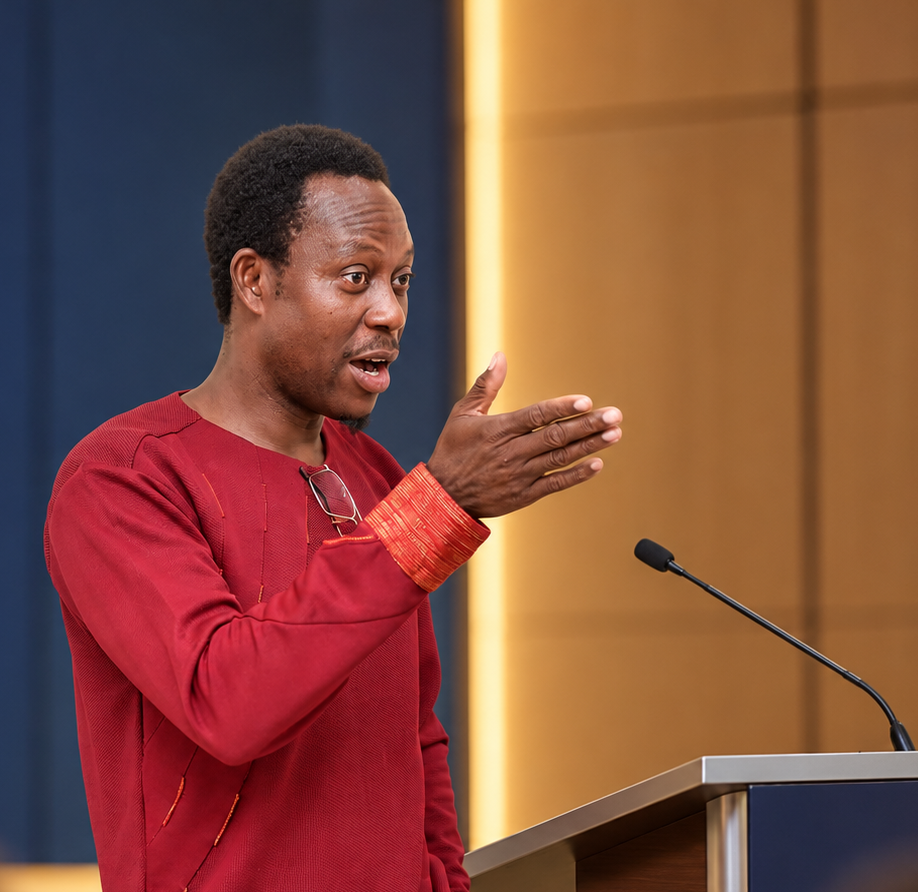
Ghana’s approach to youth participation in governance and national development must move beyond ceremonial consultations and political rhetoric to genuine inclusion in policymaking and institutional decision-making, Dr Simon Eyram Tsike-Sossah, Convener and Lead of SETS Advisory, has urged.
He stressed that young people must no longer be regarded merely as beneficiaries of government programmes or passive participants in national conversations, but as capable partners whose knowledge, perspectives and leadership can contribute meaningfully to Ghana’s developm8ent.
Dr Tsike-Sossah made the call during the Ghana Youth Leadership and Public Policy Forum, held in Accra on October 8, 2026, under the theme “Youth, Leadership and Ghana’s Development Future: From Wellbeing and Formation to Agency, Leadership and Co-Authorship.”
The forum, convened by SETS Advisory in partnership with the National Commission for Civic Education (NCCE), Greater Accra Regional Directorate, with support from Youth Development Consult, brought together young people, representatives of public institutions, policy practitioners, academics, civil society actors and media professionals.

Addressing the gathering, Dr Tsike-Sossah challenged the conventional understanding of youth participation, arguing that the presence of young people at conferences, stakeholder engagements and public consultations should not automatically be interpreted as meaningful inclusion.
He maintained that the real measure of youth participation lies in the extent to which young people influence policy priorities, contribute to the formulation of solutions and help shape institutional responses to national challenges.
“The question is no longer simply whether young people are invited into the room. The deeper question is whether they are able to shape how the problem is understood, how decisions are made and how responsibility for the future is shared,” he stated.
A central argument emerging from the forum was that Ghana must rethink the relationship between its youthful population and the institutions responsible for national development.
Participants examined the distinction between merely participating in public discussions and exercising genuine influence over decisions that affect their lives.
The discussions also explored how public institutions could establish more effective mechanisms for youth engagement, while encouraging young people to take greater responsibility for contributing to governance, leadership and public policy.
Dr Tsike-Sossah emphasised that the concept of youth co-authorship should not be misunderstood as an attempt to displace established leadership or undermine public institutions.
Rather, he explained, it calls for a more constructive relationship between generations, built on institutional learning, cooperation and shared responsibility for Ghana’s development.
The forum also highlighted the importance of research, academic knowledge and evidence-based analysis in shaping public policy, reinforcing the need for informed engagement rather than symbolic representation.
As part of the engagement, SETS Advisory introduced its strategic framework built around four interconnected principles: Strategy, Ethics, Transformation and Systems (SETS).

The framework encourages policymakers, institutions and development practitioners to examine not only the problems confronting society but also the structures, incentives, relationships and institutional practices that sustain them.
Under Strategy, participants considered the changes required and the institutions responsible for delivering them. Ethics focused on questions of fairness, dignity, representation and whose interests are recognised in decision-making.
Transformation examined the practical changes needed in institutional behaviour and relationships, while Systems explored the underlying structures that continue to reproduce undesirable outcomes.
The discussions suggested that meaningful youth inclusion requires more than policy declarations. It also demands institutional arrangements that enable young people to contribute to defining problems, developing solutions and influencing implementation.
The role of the media in shaping public perceptions of Ghanaian youth also featured prominently in the discussions.
Participants raised concerns about the tendency to portray young people predominantly through the lenses of unemployment, vulnerability, crime, protest and political mobilisation.
The forum called for a more balanced and constructive representation of young people, recognising their contributions as innovators, professionals, researchers, citizens and emerging leaders with the capacity to influence national progress.
It further underscored the responsibility of journalists and broadcasters to promote informed public discourse that reflects both the challenges facing young people and their potential to contribute to institutional and policy transformation.
The forum, included a panel discussion and an open dialogue session examining practical pathways towards meaningful youth engagement. SETS Advisory indicated that the insights generated would contribute to future policy dialogues, research initiatives, training programmes and institutional engagements focused on youth leadership, governance and national development.
The engagement brought renewed attention to a fundamental question confronting Ghana’s development agenda: whether young people will continue to be consulted primarily as beneficiaries of decisions made by others, or increasingly become active contributors to the decisions themselves.

For SETS Advisory, the direction is clear. Youth participation must evolve from simply having a voice to possessing the opportunity, responsibility and institutional space to help shape Ghana’s future.