








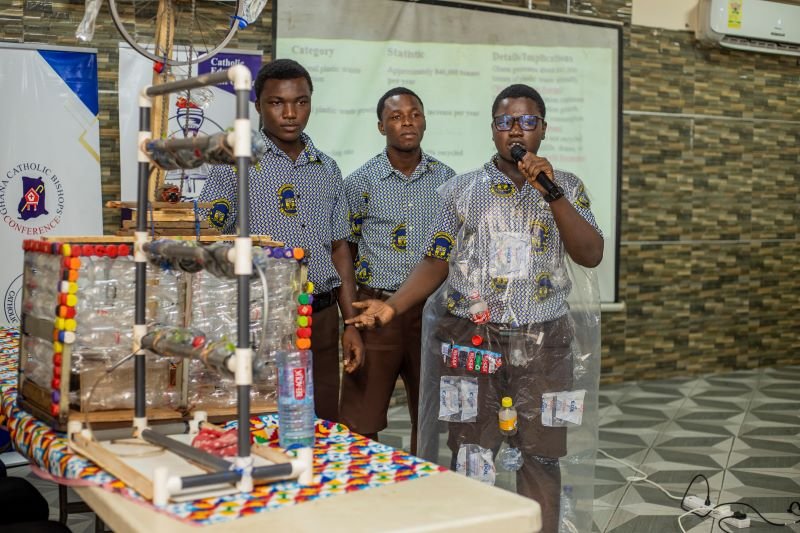
St Augustine’s College has won a science, technology, engineering and mathematics competition focused on solutions to plastic waste.
The contest required participating students to apply STEM principles to an environmental problem affecting communities across Ghana.
Plastic waste remains a visible component of refuse in drains, streets, beaches and disposal sites.
The competition created a platform for students to examine how scientific knowledge and practical design could be used to address that challenge.
St Augustine’s emerged as the winning school after presenting its work to the competition’s assessors.
The project connected classroom subjects with waste management, product design and environmental sustainability.
STEM competitions commonly assess how teams define a problem, develop a method, build or explain a solution and communicate the expected result.
The plastic-waste theme allowed students to consider recovery, sorting, reuse, recycling and alternative applications for discarded material.
The achievement adds to the Cape Coast school’s record in academic and extracurricular competition.
It also places student innovation within the wider national discussion about plastic pollution and sanitation.
Ghana generates significant quantities of plastic packaging through household, commercial and industrial activity.
Where waste is not properly collected, it can enter drainage systems and contribute to blocked waterways.
Plastic also persists in the environment because many common materials do not break down quickly.
School-based science programmes give students an opportunity to investigate those processes and develop ideas grounded in measurement and experimentation.
The competition’s outcome recognises St Augustine’s performance while exposing other participating students to environmental problem-solving.
The winning project may also serve as a basis for further development if the students and organisers continue testing the concept.

St Augustine’s College has been declared the winner, concluding the competitive stage of the plastic-waste STEM programme.